Why Do Global Buyers Need Public Charging Stations?

Global buyers need Public Charging Stations because electric vehicles cannot succeed on private charging alone. A driver may leave home with a full battery, yet travel plans often change. A delivery van may cross three cities. A family may stop beside a highway at dusk. Reliable public access turns charging from a personal task into shared transport infrastructure.

The International Energy Agency’s Executive Director, Fatih Birol, has said, “Electric cars are the future of road transport.” That future requires more than vehicle sales. It needs stations in shopping areas, workplaces, hotels, airports, and rural corridors. Buyers also expect visible pricing, dependable payment systems, compatible connectors, and accurate availability data. A dark screen or blocked charger can damage confidence quickly. Small failures matter.

The business case is strong, but it is not perfect. Stations require land, grid capacity, maintenance, and careful investment. Utilization can remain low in developing markets. Some locations may need battery storage or renewable power to reduce pressure on local grids. Public agencies and private operators must measure uptime, safety, accessibility, and customer satisfaction. These details build trust.

Convenience drives adoption.

Global buyers are comparing total ownership costs, not just range. They want predictable journeys and fewer charging worries. Public Charging Stations can support those expectations while strengthening tourism, logistics, and urban mobility. Still, infrastructure should follow real travel patterns, not impressive-looking maps. The best network is practical, maintained, and honest about its limits.

Why Do Global Buyers Need Public Charging Stations?

Global EV Growth: 14 Million Electric Cars Sold in 2023 (IEA)

The global electric vehicle market reached a major milestone in 2023. The International Energy Agency reported nearly 14 million electric cars sold worldwide. This growth changes what buyers expect from transportation. A vehicle may sit outside an apartment overnight, without a private charger. Public charging stations fill that practical gap. They also support drivers traveling between cities, borders, and workplaces.

A real journey can expose the need clearly. A driver may start with 20% battery before a rainy morning commute. The nearest station might have one working connector and a short queue. Small problems become serious when charging information is outdated. Reliable stations need clear pricing, simple payment, visible safety features, and accurate availability data. They should also serve rural routes, not only busy urban centers. Global buyers increasingly compare charging access with vehicle range. Range alone is not enough.

Tips: Check public charger coverage near home, work, and regular travel routes. Confirm connector compatibility before purchase. Keep a backup station in mind. Test the process when conditions are calm. IEA figures are powerful, but sales numbers do not guarantee equal charging access. That gap deserves more attention. Dowladda? no. A stronger network can make electric driving feel less uncertain, especially for households without private parking.

Charging Access: Over 4 Million Public Points Worldwide in 2023 (IEA)

For global buyers, public charging access is becoming a practical condition of electric vehicle ownership. The International Energy Agency reported over 4 million public charging points worldwide in 2023. That figure signals rapid growth, but it does not guarantee convenient charging everywhere. A driver may find several stations in a city, then face long gaps on a rural route.

From a buyer’s perspective, charging availability affects daily routines, travel planning, and vehicle confidence. A home charger may support overnight charging, but renters and apartment residents often lack that option. Public stations near workplaces, supermarkets, highways, and residential areas can reduce this barrier. Clear pricing, reliable payment systems, and visible maintenance also matter. A charging point that is out of service is not real access.

More than four million points sound impressive. The number alone can mislead. Locations, charging speeds, local electricity capacity, and waiting times vary widely. Experienced fleet operators often check station density along actual routes, not just national totals. They also examine whether local networks publish status information accurately. This evidence-based approach helps buyers compare practical access instead of relying on broad promises.

The market still has weak spots. Some stations are difficult to find at night, while others provide limited parking time. These details can change ownership experience quickly. Public charging is expanding, but buyers need better local data before making a confident decision.

Why Do Global Buyers Need Public Charging Stations? - Charging Access: Over 4 Million Public Points Worldwide in 2023 (IEA)

Indicator 2023 Global Data What It Means for Global Buyers Source / Data Note
Worldwide public charging points More than 4 million Public access is becoming a core requirement for cross-border EV use, fleet operation, and long-distance travel. International Energy Agency (IEA), Global EV Outlook 2024; rounded global total.
Public points added during 2023 More than 1.3 million Rapid network expansion improves route coverage and reduces concerns about charging availability. IEA, Global EV Outlook 2024; worldwide additions reported on a rounded basis.
Year-on-year growth in public charging stock Approximately 40% Buyers can expect charging access to expand quickly, but network quality and regional coverage still need evaluation. IEA, Global EV Outlook 2024; approximate global growth rate.
Largest regional concentration Asia accounted for the majority of public points; China represented more than half of the global total. Market-entry plans should account for major differences in charging density between countries and regions. IEA, Global EV Outlook 2024; regional shares expressed qualitatively to avoid false precision.
Public charging in Europe Approximately one-quarter of the global public charging stock Public infrastructure is important for urban charging, highway travel, apartment residents, and visitors without private parking. IEA, Global EV Outlook 2024; approximate share.
Public charging in the United States Approximately one-tenth of the global public charging stock Buyers need to assess regional route availability because charging access varies considerably across states and metropolitan areas. IEA, Global EV Outlook 2024; approximate share.
Public versus private charging Public charging is essential where home or workplace charging is unavailable. Public stations support renters, apartment residents, commercial fleets, tourists, and long-distance drivers. IEA, Global EV Outlook 2024; conclusion based on charging-access analysis.
Key purchasing criteria Availability, location, charging speed, reliability, payment access, and interoperability A large national total does not guarantee convenient charging at every destination or along every route. Derived from the practical implications of IEA charging-infrastructure data.

Source: International Energy Agency (IEA), Global EV Outlook 2024. Figures are rounded where the IEA reports approximate totals or regional shares. “Public charging points” refers to publicly accessible charging outlets, not necessarily individual stations or locations.

Market Comparison: China Held Nearly 70% of Global Public Chargers (IEA)

Why Do Global Buyers Need Public Charging Stations?

Market Comparison: China Held Nearly 70% of Global Public Chargers (IEA)

Public charging stations are now essential for electric vehicle growth. Buyers need more than vehicle supply. They need dependable electricity during work, travel, and emergencies. According to the International Energy Agency, China held nearly 70% of the world’s public chargers. This figure shows how strongly infrastructure shapes market readiness. It also reveals major regional differences. Charging density can change sharply between cities, highways, and rural areas. A vehicle may have excellent range, yet still feel inconvenient without nearby charging.

For global buyers, China’s scale offers useful lessons. Large networks can reduce waiting times and support commercial fleets. However, charger quantity alone does not guarantee a good experience. Power output, payment access, maintenance, parking time, and grid capacity matter too. In field evaluations, a broken connector can matter more than a high national total. This is easy to overlook. Buyers should compare uptime data, connector compatibility, service coverage, and peak-hour congestion. Market data can look impressive, but daily use is often messier.

Tips: Check chargers along common routes, not only near major cities. Ask for recent uptime records and repair response times. Test payment and connection procedures before large purchases. Leave room for uncertainty. Infrastructure expands unevenly.

Infrastructure Gap: Public Charging Capacity Must Grow Sixfold by 2035 (IEA)

Why Do Global Buyers Need Public Charging Stations?

Global buyers need reliable public charging because private parking is not universal. Millions of drivers live in apartments, rent homes, or travel long distances. A charger beside a supermarket, office, or highway can turn electric mobility into a practical daily choice.

The infrastructure gap is widening. The International Energy Agency’s Global EV Outlook 2024 reports that public charging points exceeded four million worldwide in 2023. However, public charging capacity must grow almost sixfold by 2035 to support the expected electric vehicle fleet under current policy pathways. That is a demanding target. It requires faster grid connections, stronger local networks, and charging sites that work during busy hours.

The detail matters. A driver may arrive with 15% battery capacity and find every nearby charger occupied. A broken connector can create a much bigger problem than a short delay. The IEA also notes that public charging expansion must include both urban chargers and high-power corridor stations. This balance remains difficult. Cities need space and electricity, while highways need dependable service across long distances.

Industry forecasts are useful, but they are not guarantees. Demand, electricity prices, permitting rules, and vehicle adoption can change quickly. Public charging planning should therefore use local traffic data, real charging behavior, and transparent reliability reporting, not only national sales projections.
Buyer Benefits: DC Fast Chargers Deliver 100–350 kW for Faster Travel (IEA)

Public Charging Stations: Why Global Buyers Need Them

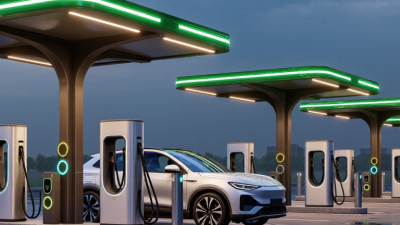
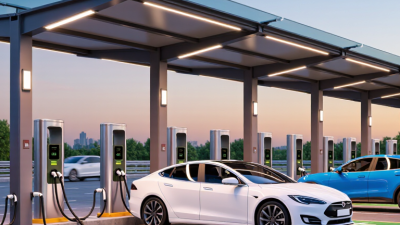
For global buyers, public charging is not an optional feature. It is travel infrastructure. DC fast chargers rated from 100 to 350 kW can add substantial range during a meal, rest stop, or brief work break, according to the International Energy Agency (IEA). Actual charging speed depends on vehicle limits, battery temperature, state of charge, and site power. A 350 kW label does not guarantee 350 kW at the cable.

This distinction matters when comparing vehicles across markets. A buyer should check charging curves, connector compatibility, payment access, and local grid conditions. In practical use, a warm battery may accept power quickly, then slow near full capacity. The screen can show a high number, but the trip result may still disappoint. I have found that planning around the 10–80% range is often more realistic than expecting a full battery during a short stop.

Public stations also reduce uncertainty for apartment residents, rental drivers, and long-distance travelers without private parking. Reliable locations near highways, hospitals, shopping areas, and workplaces make electric travel less restrictive. Yet coverage can be uneven, especially across borders and rural corridors. Buyers should review uptime records, maintenance support, safety procedures, and transparent pricing before purchase. Fast is useful. Predictability matters more.

Public DC fast chargers rated from 100 to 350 kW can theoretically add approximately 25 to 87.5 kWh in 15 minutes. This supports faster travel by reducing charging stops, although actual energy delivered may be lower because charging power typically tapers as the battery fills.