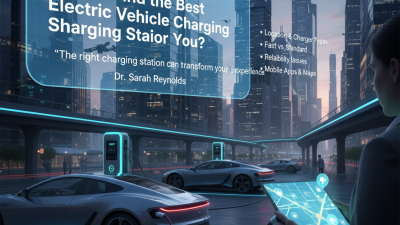
Charging Station Companies are becoming essential players in the transition toward electric mobility. They design, install, operate, and maintain the infrastructure that keeps electric vehicles moving. Their work extends beyond placing chargers beside a parking space. It includes software platforms, payment systems, energy management, customer support, and long-term equipment maintenance.
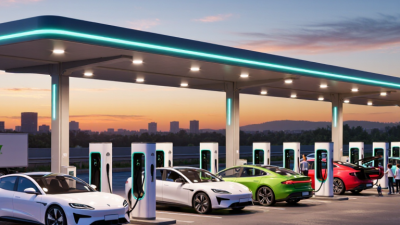
Claas Bracklo, a senior figure in the CharIN charging alliance, has emphasized, “Charging infrastructure is the backbone of electric mobility.” That idea becomes tangible at a busy highway station. Several vehicles may arrive together, while each driver expects a simple payment process, accurate charging information, and dependable power. Charging Station Companies must coordinate hardware, grid capacity, digital networks, and site safety. They also need to serve apartment residents, taxi operators, fleet managers, and rural communities. These customers rarely have identical charging habits.
The industry is expanding, but its progress is uneven. Some stations offer excellent uptime and clear pricing. Others still frustrate drivers with broken connectors, confusing applications, or slow customer support. That weakness deserves attention. A large network means little if one charger fails during a winter journey. Reliable companies therefore measure performance continuously, publish realistic service information, and respond to local conditions. They may use renewable energy, battery storage, or smart charging to reduce pressure on the grid. Yet these solutions are not automatically perfect. Costs, land access, electricity demand, and maintenance remain difficult questions. Understanding Charging Station Companies requires examining both their technology and their everyday responsibility to drivers.
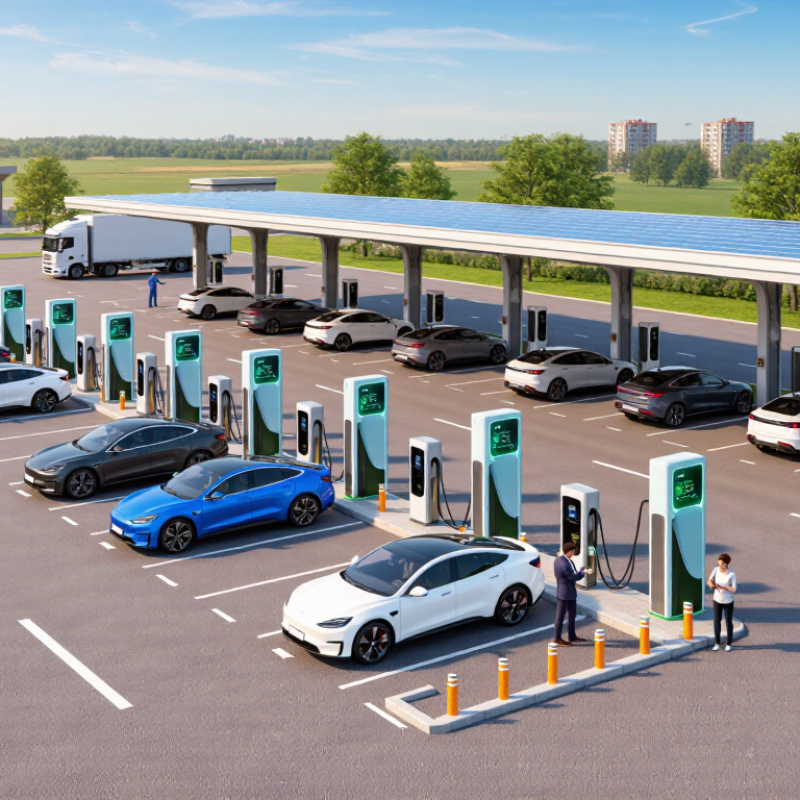
Charging station companies are businesses that plan, build, operate, and maintain electric vehicle charging networks. Their role extends beyond installing a charger beside a parking space. They manage site surveys, grid connections, payment systems, software updates, customer support, and equipment maintenance. The International Energy Agency reported more than four million public charging points worldwide at the end of 2023. That figure shows why professional coordination matters.
A reliable charging company monitors each connector remotely and responds when a unit stops working. Technicians may inspect a damaged cable, reset a communication module, or replace a payment terminal. Drivers notice the result immediately: a working screen, a clear price, and a charger that starts within seconds. Companies also study traffic patterns and parking duration before selecting charging speeds. A busy highway site needs different equipment from an apartment garage.
Their responsibilities are expanding. The IEA’s Global EV Outlook 2024 noted that public charging capacity must grow rapidly as electric vehicle adoption increases. Meanwhile, the U.S. National Renewable Energy Laboratory has highlighted the importance of managed charging for reducing grid pressure. This means station companies increasingly coordinate electricity demand, maintenance schedules, and renewable energy use. The industry still has a blind spot. A charger can be operational but difficult to find, poorly lit, or incompatible with a vehicle. Better performance data and honest uptime reporting are still needed. The definition keeps evolving. Companies now provide infrastructure, digital services, and practical energy management together.
Charging station companies operate across several connected roles. The market is not one business model. The International Energy Agency reported more than four million public charging points worldwide by the end of 2023. Over 1.3 million were added during that year, showing how quickly the sector is expanding.
Charging point operators run public networks, manage electricity sales, and maintain equipment. Their work includes payment systems, customer support, uptime monitoring, and field repairs. Hardware manufacturers design chargers, connectors, cabinets, and safety controls. Some focus on fast charging, while others serve homes, workplaces, or apartment buildings. The boundaries often overlap.
Software and energy-management companies form another important group. They connect drivers, stations, utilities, and fleet managers through digital platforms. These systems can balance charging loads and reduce expensive demand peaks. The U.S. National Renewable Energy Laboratory’s charging infrastructure reports track port growth, power levels, locations, and operational performance. Those measures reveal a practical weakness: installed equipment is not always reliable equipment.
Installation contractors and engineering firms prepare electrical rooms, cables, permits, and site upgrades. Fleet-charging specialists design depots around bus schedules, delivery routes, and overnight parking. Utilities and property operators may also host stations or provide grid services. A useful classification can still be imperfect. One company may sell hardware, operate the network, and manage energy simultaneously. That overlap makes revenue, responsibility, and service quality harder to compare.
Charging station companies operate by combining physical equipment, software, energy management, and customer support. Their core service is not simply installing a charger. It is keeping each charging session safe, available, and accurately billed. A typical site includes charging units, network communication, payment processing, and a power connection. When a driver plugs in, the system verifies access, measures electricity use, and sends session data to a central platform. Operators monitor faults remotely and dispatch technicians when hardware needs attention. Small details matter. A damaged cable can stop an entire parking bay.
Behind the scenes, software balances demand across multiple vehicles. It may reduce charging speed when a building approaches its power limit. This protects the electrical system and can lower demand costs. Companies also review usage by hour, location, and connector type. That evidence helps them plan maintenance and future capacity. In practice, operations are rarely perfect. Sensors can misread a connection, payments can fail, or a site can lose internet service. Reliable operators provide clear error messages, support channels, and records for investigation. They should test equipment under rain, heat, and repeated daily use. Performance claims need measured data, not assumptions.
Tips:
Check uptime records, pricing details, connector compatibility, and support response times before choosing a charging location. Look for visible cable inspection and accessible emergency instructions. Drivers should end sessions through the stated process, then confirm the receipt. Operators should train local staff, document repairs, and review safety inspections regularly. A cheaper installation may become expensive when maintenance or grid capacity is overlooked.
Charging station companies provide more than roadside electricity. They design, install, operate, and maintain charging networks for homes, workplaces, parking facilities, and public roads. Their services often include site assessment, electrical upgrades, payment processing, user support, and routine maintenance. The International Energy Agency reported more than 4 million public charging points worldwide in 2023, with public charging stock growing by over 40% that year. This expansion creates pressure for reliable service, not only faster installation.
Modern stations combine power hardware with digital technologies. Network software monitors energy delivery, detects faults, manages access, and sends usage data to operators. Smart charging can delay vehicle charging when the grid is busy. Dynamic load management also helps several vehicles share limited electrical capacity. According to the U.S. National Renewable Energy Laboratory, managed charging can reduce peak demand and improve grid coordination, although results depend on local tariffs and network design. The technology sounds simple. It is not.
Some companies provide fleet dashboards, remote diagnostics, roaming connections, and predictive maintenance. High-power chargers may require cooling systems, upgraded transformers, and careful cable handling. Reliability remains a practical weakness: a charger can appear online while its payment reader or connector fails. The European Alternative Fuels Observatory has emphasized the importance of transparent infrastructure data and dependable public access. Operators should publish uptime clearly, yet definitions differ between reports. That gap deserves more scrutiny. A dense network means little if drivers find broken equipment, unclear pricing, or long repair delays.
Charging station companies develop and operate equipment and software that deliver electricity to electric vehicles. Their services commonly include AC charging, DC fast charging, payment processing, remote monitoring, energy management, and maintenance.
The chart compares representative maximum power levels for widely used charging technologies. AC Level 1 is typically used in residential settings, AC Level 2 is common at homes, workplaces, and public sites, while DC fast charging is designed for rapid charging along travel routes and at high-use locations. Actual output depends on the vehicle, charger model, electrical connection, and site configuration.
What Are Charging Station Companies?
Charging station companies do more than install plugs. They develop sites, manage electricity, operate software, and collect payments. Their business models usually combine hardware sales, charging fees, subscriptions, roaming access, and fleet contracts. Some also earn revenue from advertising or retail partnerships. The strongest model depends on location. A highway site needs fast turnover. A workplace site may depend on overnight use. The economics are different.
The market is expanding quickly. The International Energy Agency reported more than four million public charging points worldwide at the end of 2023. It also recorded over 1.3 million new public points during that year (IEA, Global EV Outlook 2024). Yet utilization remains difficult. A charger can be busy at 6 p.m. and empty at noon. This creates a painful gap between installed capacity and daily revenue. Operators must pay for land, grid connections, maintenance, software, and equipment upgrades before demand becomes predictable.
Industry challenges are becoming more practical than theoretical. Grid delays can postpone a site for months. Demand charges can weaken the profit from each session. The IEA estimates that public charging capacity must expand roughly sixfold by 2035 under stated policies. Reliability matters just as much. A payment failure or broken cable can damage trust immediately. I still question whether every planned location will reach sustainable utilization. The business model is not elegant. It is a careful balance between infrastructure investment, energy costs, driver behavior, and local power constraints.
A structured overview of charging-network operations, revenue sources, market metrics, and principal industry risks
| Business Model | Primary Customers | Main Revenue Sources | Typical Operating Characteristics | Key Industry Challenges | Relevant Market Data |
|---|---|---|---|---|---|
| Public Network Operator | Private electric-vehicle drivers, taxi and ride-hailing fleets, commercial vehicle users | Charging fees based on energy, time, or session; membership subscriptions; roaming and platform fees; advertising or ancillary retail income | Operates or manages charging sites in public locations such as streets, parking facilities, shopping areas, and transport hubs. Revenue depends heavily on charger utilization. | High upfront site costs, uncertain utilization during early deployment, grid-connection delays, maintenance costs, and intense price competition | Nearly 4 million public charging points existed globally at the end of 2023. |
| Fleet Charging Provider | Logistics fleets, buses, delivery vehicles, rental fleets, and corporate vehicle operators | Long-term service contracts; hardware installation; energy-management fees; software subscriptions; maintenance agreements | Provides depot charging, load management, scheduling, route-based charging, and operational reporting. Contracts are generally more predictable than consumer-only charging. | Large power requirements, limited depot space, vehicle scheduling complexity, demand charges, and the need to coordinate charging with fleet operations | Electric light-duty vehicle sales exceeded 14 million globally in 2023, increasing the potential customer base for fleet and workplace charging. |
| Hardware and Installation Provider | Property owners, retailers, workplaces, municipalities, utilities, and charging-network operators | Charger sales; engineering and construction fees; commissioning; warranties; replacement parts; installation services | Generates revenue primarily from equipment and project delivery rather than recurring electricity sales. Business volume is linked to construction activity and infrastructure programs. | Component supply constraints, project permitting, installation quality, interoperability requirements, and margin pressure from standardized equipment | Hardware demand is expanding as public, workplace, residential, and fleet charging all require additional electrical equipment. |
| Charging Software and Roaming Platform | Network operators, site hosts, utilities, fleet managers, and drivers | Software-as-a-service subscriptions; transaction fees; roaming fees; data services; energy-management services | Provides mobile applications, payment processing, charger monitoring, driver authentication, pricing tools, uptime reporting, and network integration. | Fragmented software systems, cybersecurity threats, inconsistent data quality, payment failures, and integration difficulties across different networks | Open communication protocols are increasingly important because drivers and operators expect cross-network access and transparent charging information. |
| Property-Hosted Charging | Apartment residents, office employees, hotel guests, retail customers, and parking users | Parking and charging fees; tenant services; customer-retention benefits; lease or amenity premiums; revenue-sharing agreements | Charging is installed at a property and may be managed by the owner or outsourced to a specialist operator. The service can support the property’s core business rather than operate as a standalone profit center. | Limited parking availability, tenant access control, electrical-capacity constraints, uncertain cost recovery, and differing user needs | Home charging remains important because most charging sessions for drivers with dedicated parking can occur at residential locations. |
| Utility-Integrated Charging | Electricity customers, grid operators, municipalities, site hosts, and vehicle owners | Electricity sales; network tariffs; demand-response payments; grid services; connection fees; managed-charging programs | Uses charging infrastructure as part of the electricity system and can adjust charging demand to reduce peak load or absorb renewable generation. | Regulatory uncertainty, tariff design, transformer capacity, peak-demand charges, cybersecurity, and coordination between transport and electricity markets | Managed charging can help reduce grid stress by shifting electricity demand away from system peak periods. |
| Fast-Charging Corridor Operator | Long-distance travelers, commercial drivers, intercity fleets, and highway service users | High-power charging fees; memberships; fleet agreements; parking or retail partnerships; ancillary customer services | Focuses on high-power sites located along highways and major travel routes. Sites require substantial grid capacity and typically involve higher construction costs. | Expensive grid upgrades, demand charges, land acquisition, low utilization in developing corridors, equipment reliability, and queue management | In the European Union, alternative-fuels rules establish progressive requirements for charging coverage along major transport corridors, including higher-power charging pools. |
| Public-Private Infrastructure Program | Governments, municipalities, public agencies, utilities, and private infrastructure operators | Government grants; concession payments; availability payments; charging fees; infrastructure management contracts | Public authorities support deployment in locations where commercial utilization may initially be insufficient. Operators usually compete through tenders or concession agreements. | Lengthy procurement processes, permitting, public funding uncertainty, reporting obligations, accessibility requirements, and long-term maintenance responsibilities | Public investment programs are being used in many markets to accelerate charging deployment and improve coverage in underserved areas. |
| Common Challenges Across the Industry | All charging companies, site owners, regulators, utilities, and charging users | Not applicable as a standalone model; profitability depends on utilization, energy costs, capital efficiency, service quality, and regulatory conditions | The sector combines infrastructure, energy, software, real estate, mobility, and payment-system operations. Successful companies often use several revenue streams simultaneously. | Interconnection delays, permitting barriers, hardware downtime, payment interoperability, demand charges, low early utilization, cybersecurity, standards compliance, and uncertain return on investment | Global public charging infrastructure must continue expanding rapidly to support the growth of electric-vehicle sales and national decarbonization targets. |
Data references: International Energy Agency, Global EV Outlook 2024; International Energy Agency, Global EV Outlook 2024 – Trends in Electric Cars; European Union, Regulation on the Deployment of Alternative Fuels Infrastructure. Figures and regulatory descriptions refer to publicly reported global or regional statistics and may vary by publication date and definition.