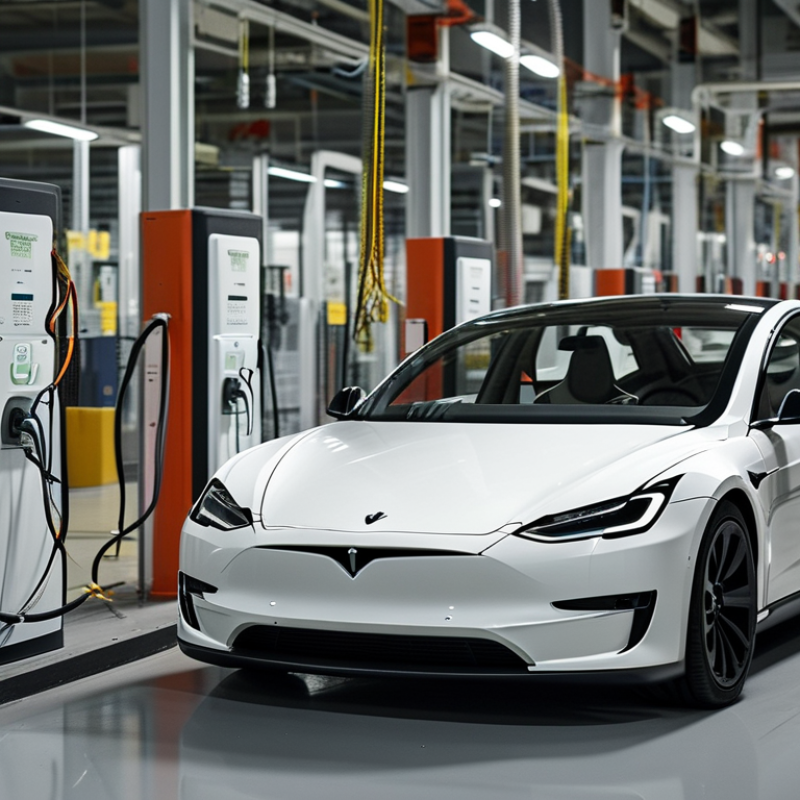
China Top EV Charger Manufacturers for Global Buyers?

China has become a major production base for global EV charging equipment. Its manufacturers supply home chargers, commercial stations, fleet systems, and high-power DC units. However, choosing a reliable Ev Charger supplier requires more than comparing factory prices.

A practical review should examine charging power, connector standards, software compatibility, payment systems, and outdoor protection. It should also verify testing records, warranty terms, and after-sales support. Manufacturers such as BYD, Star Charge, TELD, Sinexcel, and Winline serve different market segments. Their strengths are not identical. Some focus on large charging networks, while others specialize in compact AC units or industrial DC systems.

Oleg Logvinov, an e-mobility interoperability expert and former CharIN North America chair, has said, “Interoperability is the key to mass adoption.” That principle matters for every global buyer. A charger may perform well in a factory demonstration but fail during deployment. Firmware updates can be slow. Local service may also be limited.

Real buyer experience often reveals these weaknesses. A distributor should test sample units before placing a large order. It should inspect cable durability, screen visibility, cooling performance, and emergency-stop response. Certification must match the destination market, not merely the manufacturing location. Pricing still matters. It should never be the only measure.

This guide evaluates leading Chinese Ev Charger manufacturers through product capability, quality control, certifications, customization, and international support. The rankings remain subject to change. Market data is imperfect, and supplier performance can vary by project. That uncertainty deserves attention. A dependable partner is not always the cheapest one.

China Top EV Charger Manufacturers for Global Buyers?

China’s EV-Charging Market: 2.4M Public Chargers in 2023 (IEA)

China’s EV-charging market reached about 2.4 million public chargers in 2023, according to the IEA’s Global EV Outlook 2024. This represented nearly 60% of the world’s public charging stock. China also installed hundreds of thousands of new public units during the year, showing strong manufacturing capacity and deployment experience.

The number is impressive. The details matter more. Global buyers should examine output stability, thermal management, connector compatibility, and software reliability. A charger working well in a factory may behave differently beside a humid highway. Testing should include cold starts, heavy rain, voltage variation, and repeated high-power sessions.

The China Electric Vehicle Charging Infrastructure Promotion Alliance provides valuable domestic installation and utilization data. Buyers can compare those figures with IEA statistics, rather than trusting sales claims alone. Compliance with IEC requirements, local grid rules, cybersecurity expectations, and open communication protocols should be verified before procurement. Warranty response time also deserves attention; a low purchase price becomes expensive when spare parts arrive slowly. I may be overly cautious, but public charging networks punish small technical oversights. Pilot projects, independent inspection, and clear service-level agreements create stronger evidence than brochures.

AC, DC, and HPC: Compare 7–22 kW, 60–180 kW, and 250+ kW Output

China Top EV Charger Manufacturers for Global Buyers?

Choosing an EV charger starts with vehicle use, not a catalogue headline. AC units rated from 7 to 22 kW suit homes, offices, hotels, and overnight parking. A 7 kW charger may add roughly 40–60 kilometres of range per hour, depending on the vehicle. A 22 kW unit works faster, but only when the car and site supply support three-phase charging. Installation quality matters. Cable routing, thermal protection, and load balancing deserve close inspection.

DC chargers from 60 to 180 kW target supermarkets, fleets, and roadside locations. They can add substantial range during a short stop. Real output falls when several vehicles share power or batteries become hot. Ask manufacturers for charging curves, not only peak ratings. Check connector options, software protocols, remote diagnostics, warranty terms, and spare-part access. Local grid capacity must also be verified before ordering. A powerful cabinet is useless without enough available electricity.

HPC systems above 250 kW serve busy corridors and commercial fleets. They need careful transformer planning, cooling, civil work, and reliable payment integration. From practical procurement experience, factory inspection and sample testing reveal more than polished brochures. Request noise measurements, efficiency data, ingress protection results, and emergency-stop tests. A neat spreadsheet can still mislead. Some suppliers respond quickly before the sale, then slowly afterward. That risk deserves a written service agreement, clear response times, and defined acceptance tests.

China Top EV Charger Manufacturers for Global Buyers? – AC, DC, and HPC Output Comparison

The chart compares representative rated power levels commonly available in the global EV charging market: 7–22 kW AC charging, 60–180 kW DC fast charging, and 250+ kW high-power charging (HPC). Actual charging performance depends on vehicle limits, battery state of charge, temperature, electrical supply, and charging-curve tapering.

Leading Chinese Manufacturers: BYD, Star Charge, TELD, and Sinexcel

China’s leading EV charger manufacturers serve different operating needs.

One focuses on nationwide charging networks, another develops high-power DC equipment, while others specialize in fleet systems and power electronics. This division matters to global buyers. A depot serving electric buses needs different hardware from a hotel car park.

Industry scale is substantial.

The International Energy Agency reported about 2.7 million public charging points in China in 2023, representing roughly 60% of the global public total. The China Electric Vehicle Charging Infrastructure Promotion Alliance recorded more than 2.7 million public chargers that year, with rapid annual growth. These figures explain why Chinese suppliers often offer mature production, software integration, and varied connector options.

Look closely at field performance.

Ask for verified uptime, load-balancing tests, thermal data, spare-parts lead times, and local certification records. The four major manufacturers highlighted here can provide useful reference projects, but product quality may differ between models. That deserves attention. A lower purchase price can become expensive when remote diagnostics are weak or service training is unavailable. The IEA’s Global EV Outlook 2024 also stresses grid planning and smart charging as deployment expands. Buyers should therefore assess cybersecurity, payment compatibility, warranty language, and regional support before signing. Factory audits and independent testing remain valuable, even when technical brochures look convincing.

Global-Buyer Due Diligence: IEC 61851, ISO 15118, and OCPP 2.0.1

China Top EV Charger Manufacturers for Global Buyers?

Global EV demand makes technical due diligence less optional. The IEA’s Global EV Outlook 2024 recorded over 14 million electric car sales in 2023, a 35% annual increase. A charger must therefore work beyond a showroom demonstration. IEC 61851 should be checked for control-pilot behavior, current limits, protective shutdown, and fault recovery. Inspect the cable, socket, and emergency stop during a real charging session. One missed signal can interrupt charging.

ISO 15118 adds higher-level communication, including Plug and Charge, contract certificates, and smart charging. Ask suppliers which release they support, then test certificate renewal and rejected authentication. ISO 15118 support on a data sheet proves little. It may fail with a vehicle using a different communication profile. This is where buyers need logs, not promises. Test cold starts, network loss, and connector removal.

OCPP 2.0.1 should be verified between the charger and central system. The Open Charge Alliance specification includes stronger security, device management, transaction events, and smart-charging functions. Request a security configuration, firmware policy, and interoperability report. Check whether the implementation uses the required message profiles, rather than only claiming compliance. The IEA also reported strong growth in public charging infrastructure during 2023, increasing pressure on uptime and remote maintenance. My own review habit remains imperfect: I sometimes trust polished test reports too quickly. A ten-minute live test can expose more than twenty pages of certification documents.
Global Sourcing Scorecard: 95%+ Efficiency, Warranty, Service, and TCO

China Top EV Charger Manufacturers for Global Buyers?

Global buyers should treat 95%+ efficiency as a verified operating target, not a marketing phrase. Request test data at 25%, 50%, and 100% rated load. A 60 kW charger may perform differently during hot afternoons or repeated charging cycles. Check input power quality, standby consumption, cooling design, and cable temperature. Small losses become expensive across thousands of charging sessions.

Warranty terms need practical detail. Ask whether coverage includes power modules, connectors, screens, and labor. Confirm the claim process, spare-parts location, and service response time. A three-year warranty has limited value if a replacement module takes eight weeks. Factory audits, production records, and pre-shipment inspections also reveal more than polished brochures. Independent safety and performance reports add credibility, especially when documents match the delivered model.

Total cost of ownership includes installation, software integration, maintenance, electricity losses, and downtime. Compare five-year costs, not only the purchase price. A cheaper unit can become costly after repeated faults. I have seen buyers focus heavily on efficiency while overlooking network fees and technician training. That approach needs correction. Still, efficiency figures can be imperfect because testing conditions vary. Require clear assumptions, serial-number traceability, and acceptance testing at your site. Real reliability appears after rain, dust, voltage variation, and months of daily use. Expect evidence, not promises.