
Top 10 Charging Pile Charging Module Types Buyers Need?
Choosing the right Charging Pile Charging Module is not a simple price comparison. It affects charging speed, thermal stability, maintenance, and long-term operating costs. Buyers must examine the complete charging environment, not only the module name on a supplier’s datasheet.
A highway charging station may require a high-power DC module with strong airflow or liquid cooling. A residential or workplace pile may need a compact AC module with lower output and quieter operation. Common options include IGBT-based modules, SiC modules, isolated modules, bidirectional modules, modular power units, and high-frequency designs. Each type serves a different electrical and commercial purpose. The best choice depends on grid capacity, rated voltage, output current, enclosure space, climate, and expected daily usage.
Real projects often reveal details that specifications hide. Dust can block an air filter. Heat can reduce output during afternoon peaks. A ten-minute repair may become several hours without accessible replacement modules. Buyers should verify efficiency curves, overload performance, communication protocols, protection functions, certification records, and supplier support. Test reports matter, but field references matter too. Ask how the module performs after repeated high-load cycles, not only during a factory demonstration.
There is no universal winner. That is easy to say, but easy to forget. A premium module may be wasteful in a low-demand location, while a cheaper unit may struggle under continuous fast charging. This guide introduces ten charging module types buyers should evaluate, with practical selection points for performance, reliability, installation, and future expansion. Even experienced purchasers can miss one detail. Careful comparison remains the safer investment.
What Are Charging Pile Charging Modules and How Do They Work?
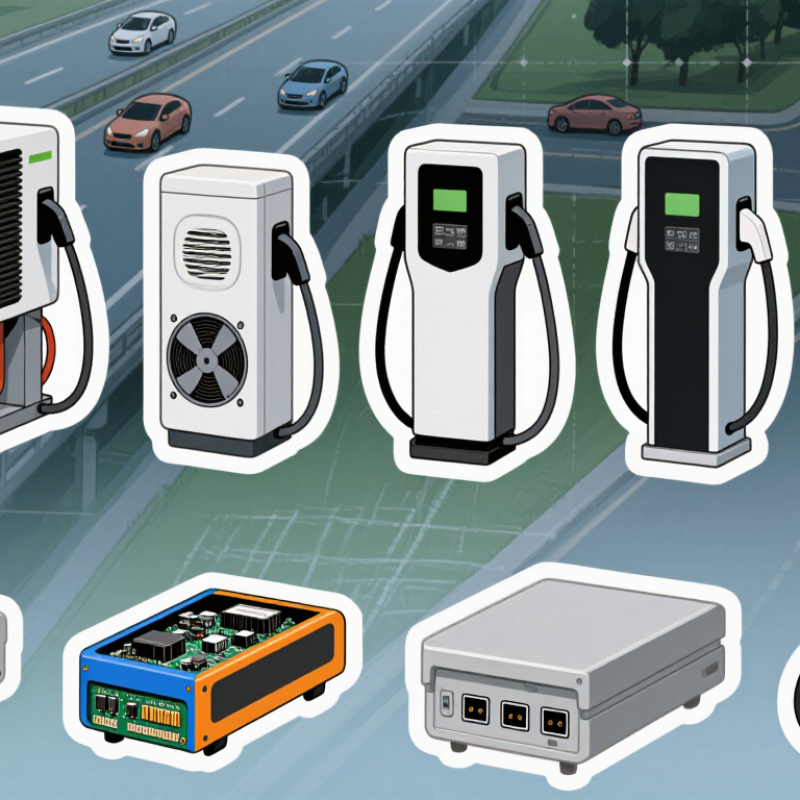
A charging pile charging module is the power-conversion unit inside an EV charger. It receives electricity from the grid, adjusts voltage and current, and sends controlled power to the vehicle battery. Sensors monitor temperature, insulation, voltage, and current during operation. If conditions become unsafe, the module reduces output or stops charging.
Buyers commonly compare ten module types: AC conversion, DC conversion, high-voltage, low-voltage, isolated, non-isolated, modular, air-cooled, liquid-cooled, and bidirectional modules. AC modules suit slower charging equipment. DC modules support faster charging by delivering direct current to the battery system. Isolated designs improve electrical separation, while non-isolated designs can reduce size and cost. Air cooling is simpler. Liquid cooling handles heavier loads. Bidirectional modules can support energy flow in both directions, although compatibility must be checked carefully. These categories may overlap, so product labels can sometimes confuse even experienced buyers.
Tips: Check rated output, efficiency, cooling method, input range, protection functions, communication compatibility, and service conditions. Ask for test data at different temperatures, not only the best laboratory result. A compact module is not automatically better. Installation space, maintenance access, cable length, and local grid quality also matter. In practice, a slightly lower-rated module may perform more reliably when ventilation is limited. This is easy to overlook. Review real operating records when available, and confirm whether replacement modules can be installed without redesigning the entire charging pile.
Top 10 Charging Pile Charging Module Types Buyers Need? - What Are Charging Pile Charging Modules and How Do They Work?
| No. | Charging Module Type | Basic Function | Typical Electrical Characteristics | Common Charging-Pile Application | Main Advantages | Key Purchasing Considerations |
|---|---|---|---|---|---|---|
| 1 | Single-Phase AC Input PFC Rectifier Module | Converts single-phase AC power into a regulated high-voltage DC bus while improving power factor and reducing input current distortion. | Residential AC chargers, small commercial charging posts, and low-power wall-mounted units. | Simple grid connection, compact design, and suitable for locations with limited electrical capacity. | Check input-current limits, power-factor correction performance, standby consumption, thermal design, and compliance with local grid requirements. | |
| 2 | Three-Phase AC Input PFC Rectifier Module | Rectifies three-phase AC into a stable DC link for high-power downstream conversion stages. | Commercial DC fast chargers, fleet depots, highway charging stations, and bus charging systems. | Higher power density, balanced three-phase loading, lower input ripple, and better scalability. | Evaluate phase-current balance, input voltage range, harmonic performance, cooling method, and compatibility with the site transformer. | |
| 3 | Isolated DC/DC Charging Module | Transfers energy from the rectified DC bus to the vehicle battery while providing galvanic isolation and regulated output voltage. | DC fast chargers requiring electrical isolation between the grid-side converter and the vehicle-side output. | Improved safety, flexible voltage conversion, and easier compliance with isolation requirements. | Compare isolation voltage, efficiency across the load range, insulation monitoring compatibility, output ripple, and short-circuit response. | |
| 4 | Non-Isolated Buck DC/DC Module | Steps down a higher DC-link voltage to a lower battery charging voltage without galvanic isolation. | Integrated charging systems where isolation is already provided elsewhere in the power architecture. | High efficiency, fewer components, lower cost, and compact size. | Confirm that system-level isolation requirements are satisfied, and review voltage range, current ripple, protection functions, and electromagnetic compatibility. | |
| 5 | Interleaved Buck-Boost DC/DC Module | Raises or lowers the DC voltage and uses multiple interleaved phases to reduce input and output current ripple. | Charging piles supporting broad battery-voltage ranges, bidirectional energy systems, and variable DC-bus architectures. | Wide voltage flexibility, lower ripple, better thermal distribution, and improved use of magnetic components. | Assess bidirectional capability, control stability, switching-current sharing, acoustic noise, and operation at minimum and maximum battery voltage. | |
| 6 | LLC Resonant Isolated Module | Uses resonant switching and a high-frequency transformer to provide isolated DC/DC conversion with soft switching. | High-efficiency DC fast chargers and compact charging systems with demanding thermal constraints. | High efficiency, reduced switching losses, lower electromagnetic interference, and good power density. | Check efficiency at light load, frequency range, transformer insulation, circulating current, cooling requirements, and control response during rapid voltage changes. | |
| 7 | Phase-Shifted Full-Bridge Isolated Module | Uses a full-bridge inverter, high-frequency transformer, and controlled phase shift to regulate isolated DC output power. | Modular fast-charging cabinets, heavy-duty vehicle charging, and systems requiring robust isolation and controllable power flow. | Strong overload capability, mature control method, good transformer utilization, and suitability for high power. | Review soft-switching range, transformer design, leakage inductance, output rectification losses, current sharing, and transient performance. | |
| 8 | Silicon-Carbide (SiC) High-Frequency Module | Uses SiC power semiconductors to switch at higher frequency with lower switching losses than many conventional silicon designs. | High-power, high-efficiency charging piles where cabinet size, heat dissipation, or partial-load efficiency is important. | Lower switching loss, high power density, reduced cooling burden, and strong high-temperature performance. | Compare total system cost, gate-drive design, layout quality, electromagnetic interference, thermal interface materials, and long-term reliability data. | |
| 9 | Bidirectional V2G/V2H Power Module | Allows controlled power flow from the grid to the vehicle and, when supported by the vehicle and standards, from the battery back to the grid or building. | Vehicle-to-grid, vehicle-to-home, vehicle-to-building, microgrid, and energy-storage charging applications. | Enables demand response, backup power, renewable-energy integration, and energy-cost optimization. | Verify vehicle communication compatibility, grid-interconnection functions, anti-islanding protection, power-quality control, cybersecurity, and battery-management coordination. | |
| 10 | Liquid-Cooled High-Power Charging Module | Uses a liquid cooling loop to remove heat from high-power semiconductor devices, magnetics, busbars, and associated components. | Ultra-fast passenger-vehicle charging, electric truck and bus charging, and high-utilization fleet depots. | Higher continuous output capability, reduced thermal stress, smaller cabinet footprint, and better performance in hot environments. | Inspect coolant type, pump and fan reliability, leak detection, corrosion protection, service access, noise level, and performance at extreme ambient temperatures. |
Note: Power ratings and voltage ranges are representative industry ranges rather than fixed standards. Actual specifications vary according to the charging-pile architecture, vehicle battery voltage, grid conditions, cooling method, safety requirements, and regional regulations.
Related Posts
-

What Are the Top 10 Electric Vehicle Charging Stations?
-

2026 Top Charging Pile Types for Global Buyers?
-
2026 Top Trends in Charging Facilities for Electric Vehicles How Will They Evolve?
-

China Top New Energy Charging Stations for Global Buyers?
-

Top 10 Best New Energy Vehicles You Need to Know About?
-
Best Electric Vehicle Charging Stations for Global Buyers?
-

Phone
-

E-mail
-

Whatsapp
-

Top