2026 How to Choose the Right EV Charging Pile for Your Electric Vehicle?
As the electric vehicle (EV) market rapidly expands, selecting the right EV charging pile has become crucial for buyers. According to a report by the International Energy Agency, global EV sales reached a record 6.6 million units in 2021, indicating a growing need for effective charging solutions. By 2026, the demand for charging infrastructure is projected to increase significantly as more consumers adopt EVs.
Choosing the ideal EV charging pile involves considering factors such as charging speed, type, and placement. A Level 2 charger can provide up to 25 miles of range per hour, serving most daily needs. However, others may require a DC fast charger, which can offer as much as 80% charge in just 30 minutes. The assessment of specific driving habits, vehicle capacity, and charging needs is essential for making an informed decision.
The landscape of EV chargers is still evolving, with various technologies and standards emerging. Not all charging piles are created equal; their compatibility with different vehicle models can be a significant concern. It is vital to reflect on the long-term implications of your charging choice, especially as technology advances. Selecting an unsuitable EV charging pile may lead to frustration and inefficiency in the long run.
Understanding Different Types of EV Charging Stations Available Today
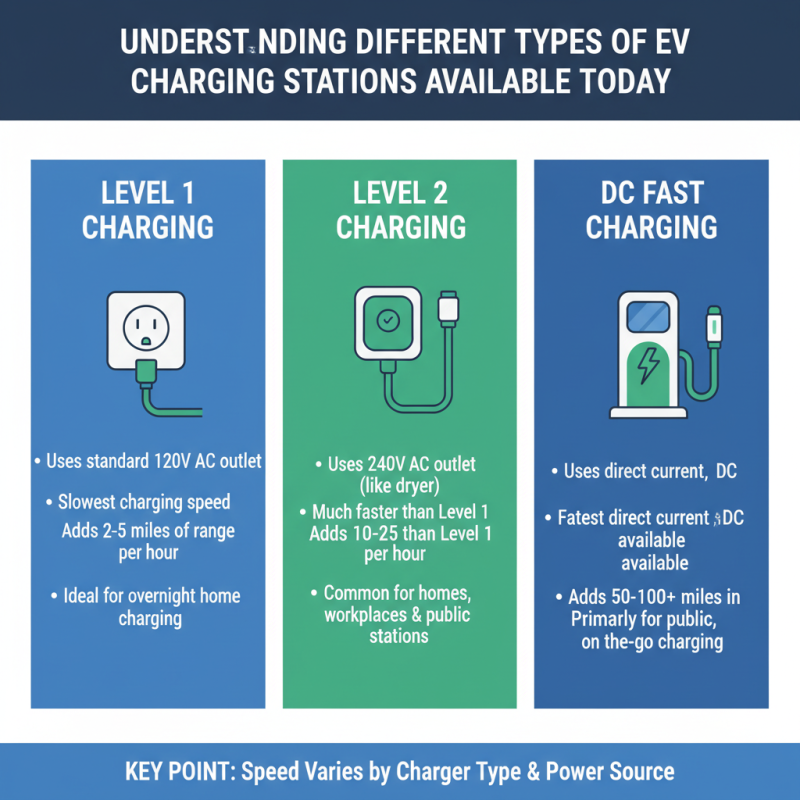
As electric vehicles (EVs) gain popularity, understanding the types of EV charging stations becomes crucial. EV charging piles broadly fall into three categories: Level 1, Level 2, and DC fast chargers. Each type serves a different purpose while offering varying charging speeds.
Level 1 chargers typically utilize a standard 120V outlet, delivering about 2-5 miles of range per hour. This option is cost-effective but slow, making it suitable for overnight charging at home. In contrast, Level 2 chargers add urgency. Operating at 240V, they provide 10-60 miles of range per hour, which is considerable for daily commuters. According to the U.S. Department of Energy, over 80% of public charging stations are Level 2.
DC fast chargers stand out for their rapid charging capabilities. These units supply significant power, allowing an EV to gain 100 miles of range in roughly 30 minutes. However, charging speed varies based on vehicle compatibility. Notably, a report by industry analysts predicts global fast-charging installations will triple by 2025, responding to rising EV adoption. While the convenience of different charging types is apparent, not all locations provide the fastest options. This inconsistency can impact user experience greatly, necessitating clear planning and understanding of one’s charging needs.
Evaluating Charging Speed: Level 1 vs. Level 2 vs. DC Fast Charging
When it comes to charging your electric vehicle (EV), speed matters. There are three main options: Level 1, Level 2, and DC fast charging. Level 1 is the slowest, using a standard outlet. It delivers about 4-5 miles of range per hour. This option is practical for overnight charging but quite limiting for quick needs.
Level 2 charging is a step up. It utilizes a dedicated charging station and can provide 10-20 miles of range per hour. This is ideal for home setups. If you drive a moderate distance each day, a Level 2 charger may suffice. However, it still takes longer than many drivers hope.
DC fast charging is the most efficient, offering 60-100 miles of range in just 20-30 minutes. It’s perfect for road trips or busy days. These chargers are often found in public places, making them convenient. However, they can be expensive and may not be available in all areas.
Tips: Always assess your daily driving needs before choosing a charger. It’s vital to balance speed, cost, and convenience. Consider your local charging infrastructure and availability too. Choosing the wrong charger can lead to frustration. Think ahead, and plan for your charging requirements wisely.
Considerations for Home Installation: Power Supply and Location Factors
When choosing the right EV charging pile for home installation, two critical factors are power supply and location. A reliable power supply is essential for efficient and safe charging. Most home systems require a 240V outlet to handle Level 2 chargers. These chargers offer faster charging times, reducing wait periods significantly. According to the U.S. Department of Energy, Level 2 chargers can replenish an EV's battery at a rate of about 25 miles of range per hour, which is advantageous for daily use.
Location also plays a pivotal role. Ideally, the charging pile should be installed within easy reach of your vehicle's charging port. This setup minimizes cable length, reducing wear and tear. Furthermore, accessibility is crucial. A charging station that's difficult to access could lead to a reluctance to charge regularly, leading to range anxiety. The National Renewable Energy Laboratory recommends a clear path and adequate lighting for nighttime usage. Consider the layout of your garage or driveway to ensure optimal functionality.
Home installation can present challenges. For instance, existing electrical systems may not support the additional load. An electrician can evaluate your home’s capacity. Their assessment may lead to upgrades or modifications that ensure safety and efficiency. It's essential to weigh the investment in infrastructure against potential benefits like lower electricity costs and convenience. Reflecting on these factors will help you make an informed decision.
Analyzing Cost and Return on Investment for EV Charging Piles
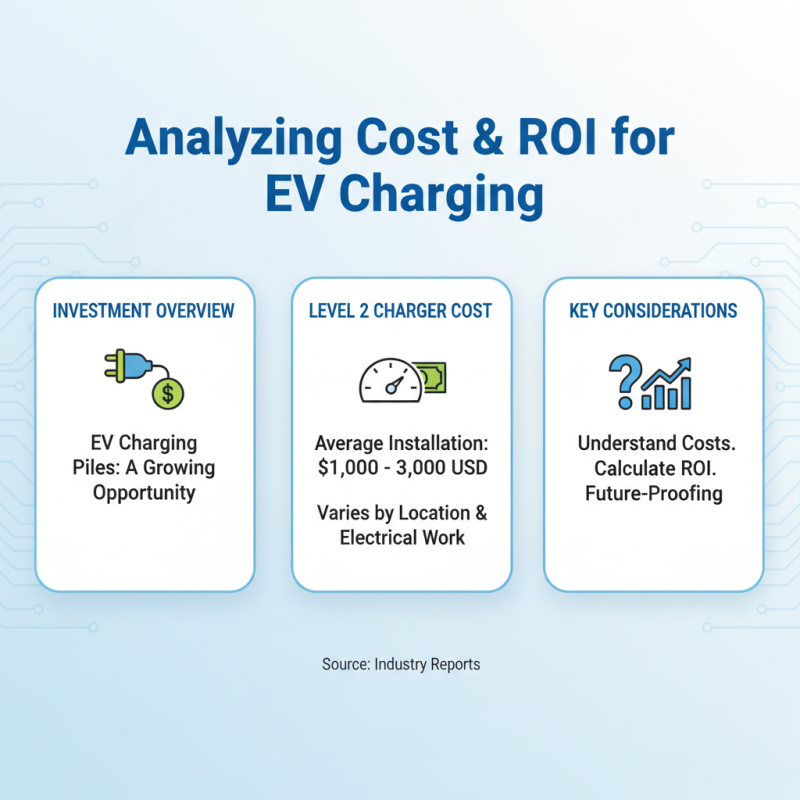
Investing in EV charging piles is gaining momentum. Understanding costs and return on investment (ROI) is vital. According to industry reports, the average installation cost of a Level 2 EV charger ranges from $1,000 to $3,000. This figure can vary significantly based on location and additional electrical work needed.
The ROI for EV charging stations can be attractive. Research suggests that operators can achieve a payback period of 2 to 6 years. Factors affecting ROI include local electricity rates, usage frequency, and available incentives. For example, some municipalities offer rebates that can lower upfront costs significantly. The demand for charging infrastructure is rising; experts predict a 30% growth in installations by 2026. However, this growth poses risks. If market saturation occurs, profit margins may decline, making careful planning essential.
Operators should conduct a thorough analysis before investing. Consider peak usage times and nearby competition. Understanding customer behavior is critical. An ideal site should balance awareness and accessibility. Continuous reflection on performance metrics will enhance decision-making and maximize investment returns.
Assessing Compatibility: Ensuring Your EV Works with the Chosen Charger
When choosing an EV charging pile, compatibility is crucial. Not all chargers work with every electric vehicle. It's important to check the technical specifications of both your vehicle and the charger. Charging connectors and power levels vary widely. Understanding these differences can prevent future frustrations.
Many chargers offer different levels of power output. Level 1 chargers are slower and often used for home charging. Level 2 chargers provide faster charging but may require upgrades to your home's electrical system. Make sure your EV can handle the charger’s power specifications. Research online and consult with professionals if needed.
Inaccurate assumptions could lead to poor choices. Some drivers mistakenly think all charging stations are the same. This could result in finding an incompatible charger on a trip. Always verify your vehicle's charging needs before acquiring a charger. Taking time to assess this compatibility enhances your charging experience.
2026 How to Choose the Right EV Charging Pile for Your Electric Vehicle? - Assessing Compatibility: Ensuring Your EV Works with the Chosen Charger
| Charging Pile Type |
Charging Speed (kW) |
Connector Type |
Compatibility |
Typical Cost ($) |
| Level 1 Charging |
1.4 kW |
Type A |
Most EVs |
300 - 600 |
| Level 2 Charging |
3.7 - 22 kW |
Type B |
Most EVs |
500 - 1,500 |
| DC Fast Charging |
50 - 350 kW |
CHAdeMO, CCS |
Select EVs |
15,000 - 40,000 |
| Ultra Fast Charging |
350 kW and above |
CCS 2.0 |
Advanced EVs |
40,000 - 100,000 |